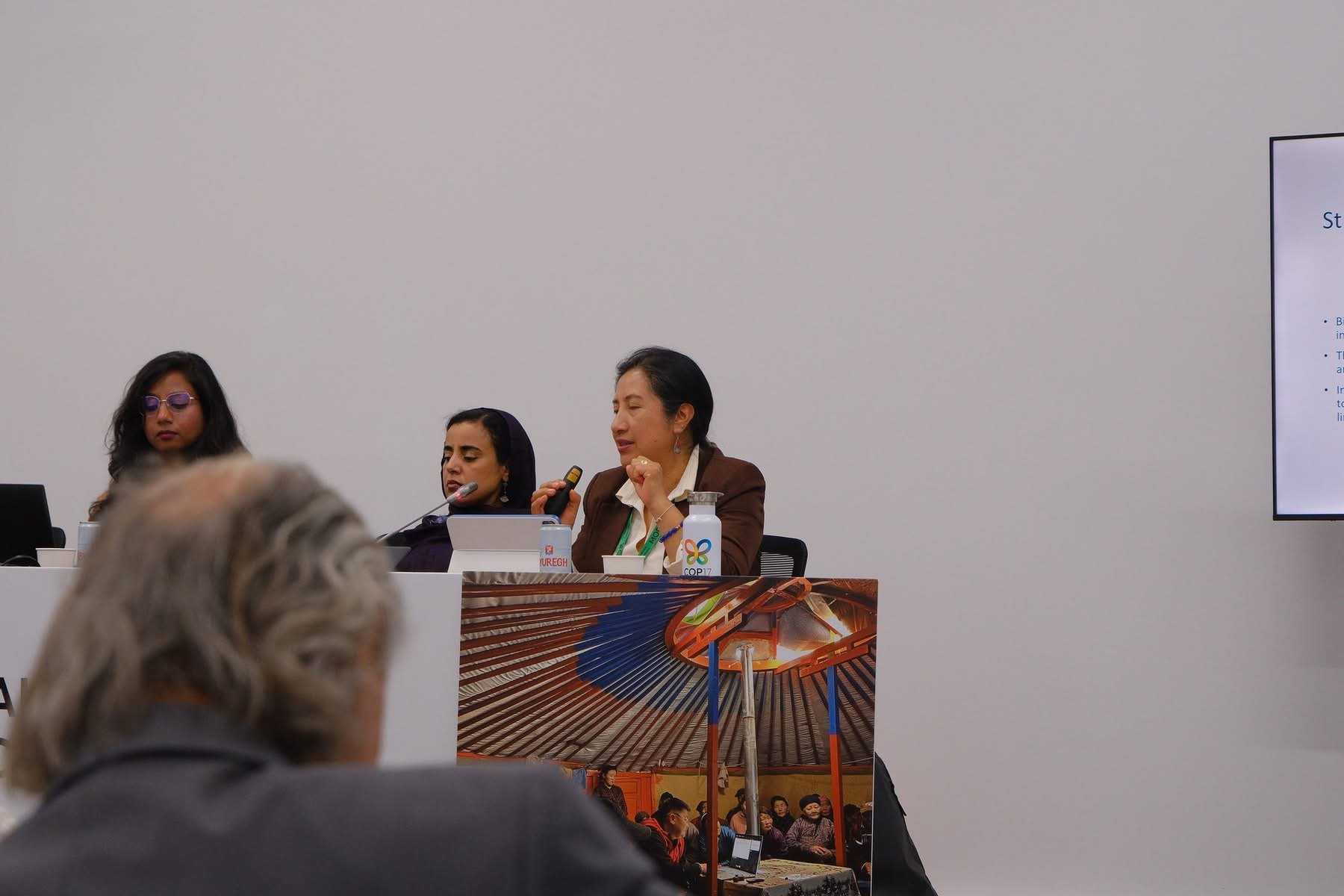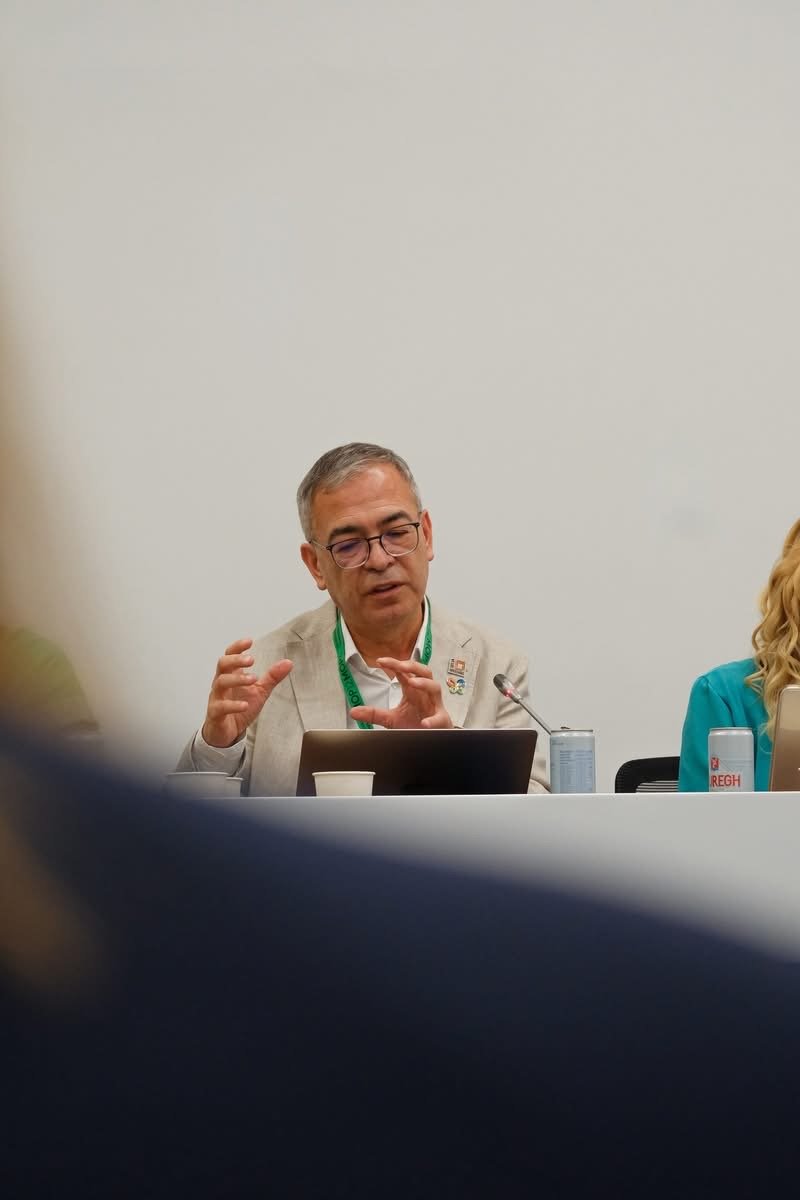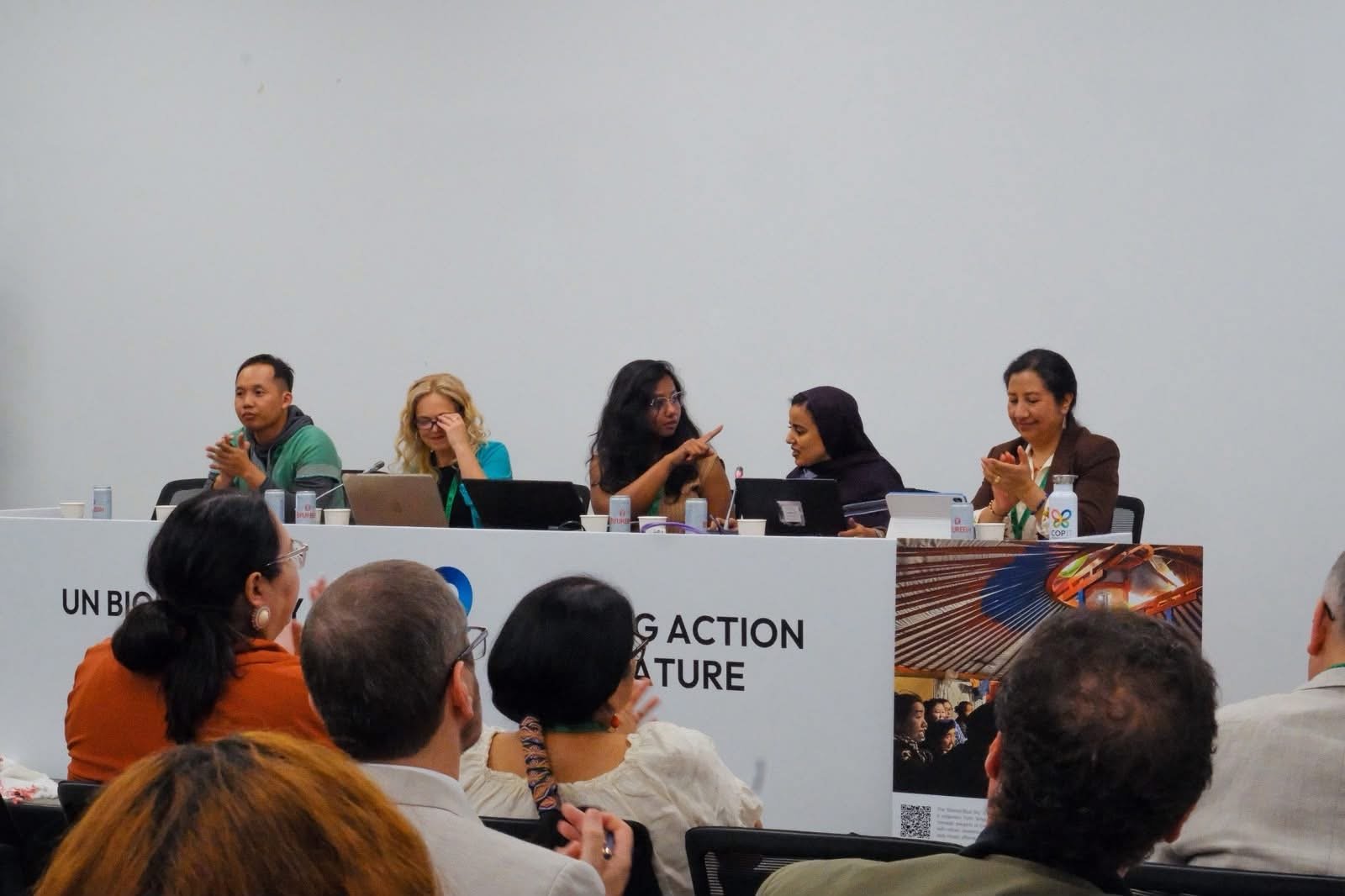
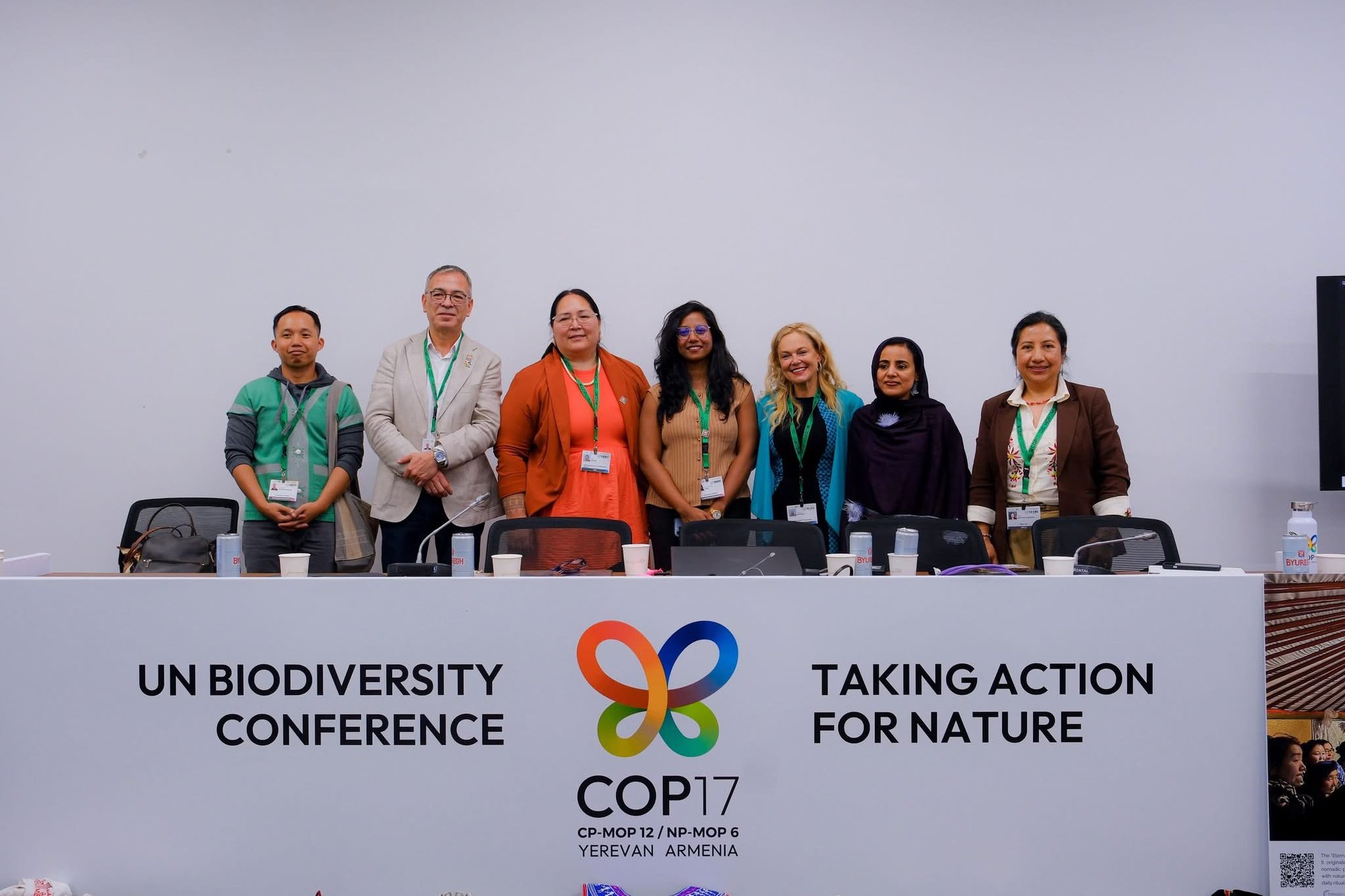
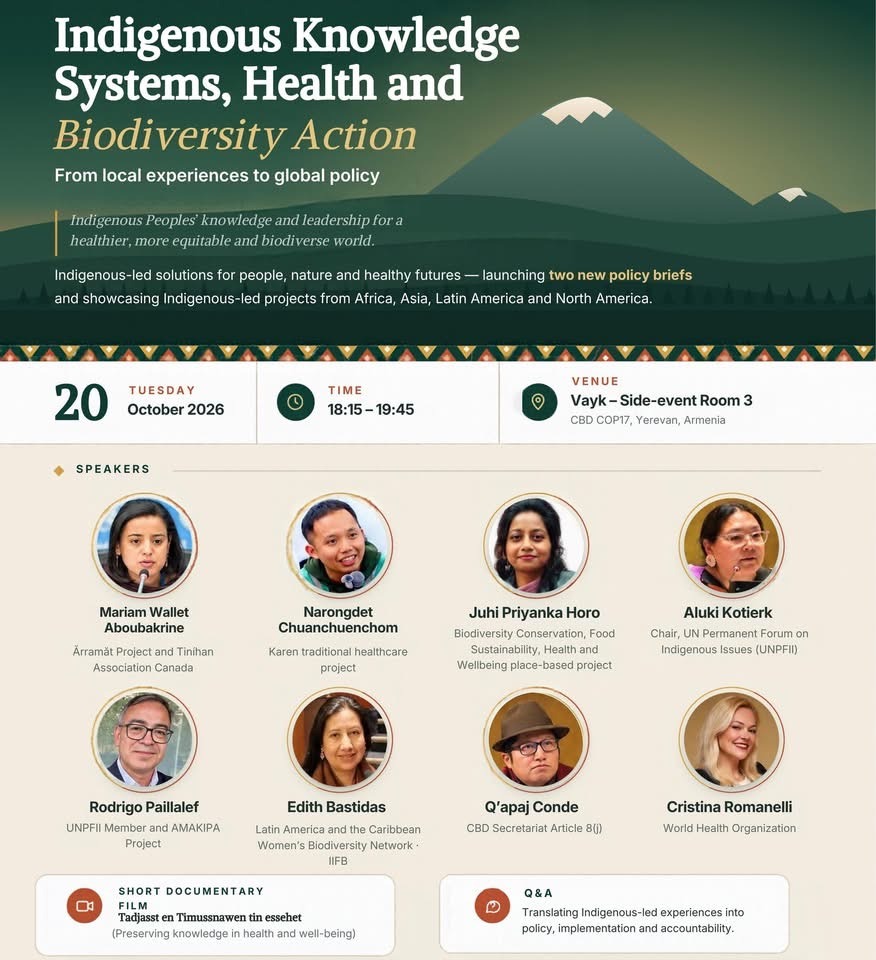
On 20 October 2026, the Ărramăt Project and the World Health Organization (WHO) co-organized the side event “Indigenous Knowledge Systems, Health and Biodiversity Action: From local experiences to global policy” at CBD COP17 in Yerevan. The evening session, held in Vayk Side-event Room 3, focused on Indigenous Peoples’ knowledge and leadership for a healthier, more equitable and biodiverse world.
The event launched two new policy briefs and showcased Indigenous-led projects from Africa, Asia, Latin America and North America. Speakers from Indigenous organizations and place-based projects, the UN Permanent Forum on Indigenous Issues, the CBD Secretariat and WHO discussed how local experiences can shape global policy on biodiversity and health.
The programme included a screening of the short documentary “Tadjasst en Timussnawen tin essehet” (Preserving knowledge in health and well-being), followed by a Q&A on translating Indigenous-led experiences into policy, implementation and accountability.
Speaking for the Ărramăt Project and Association Tinhinan, Dr. Mariam Wallet Aboubakrine set out what it takes for Indigenous-governed evidence to count in biodiversity and health action.
- Mariam Wallet Aboubakrine — Ărramăt Project and Association Tinhinan
- Narongdet Chuanchuenchom — Karen traditional healthcare project
- Juhi Priyanka Horo — Biodiversity Conservation, Food Sustainability, Health and Wellbeing place-based project
- Aluki Kotierk — Chair, UN Permanent Forum on Indigenous Issues (UNPFII)
- Rodrigo Paillalef — UNPFII Member and AMAKIPA Project
- Edith Bastidas — Latin America and the Caribbean Women’s Biodiversity Network, IIFB
- Q’apaj Conde — CBD Secretariat, Article 8(j)
- Cristina Romanelli — World Health Organization (WHO)
Built with WHO at the Ărramăt-WHO workshop in Marrakech in September 2026, this brief draws on seven Indigenous-led case studies from Belize, Thailand, India, Mali, the Sahel, Canada, and Chile, Ecuador and Colombia. It responds to CBD decision 16/19 on the Global Action Plan on Biodiversity and Health.
A second policy brief, from the AMAKIPA project, was also launched at the event.
A short documentary on preserving knowledge in health and well-being. Learn more about the tendé research.