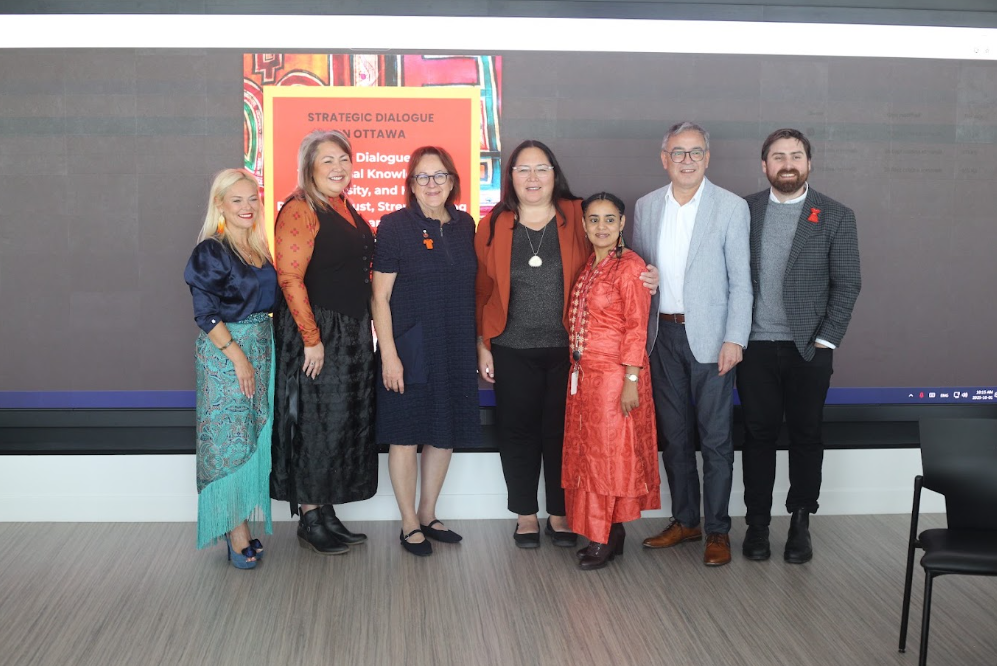
On the occasion of the tenth anniversary of the final report of Canada’s Truth and Reconciliation Commission, Association Tinhinan co-organized an international dialogue on traditional knowledge, biodiversity, and health at the University of Ottawa, in partnership with the World Health Organization, the Ârramăt project, and DOCIP.
Bringing together Elders, knowledge holders, Indigenous leaders, researchers, health professionals, and United Nations representatives, this gathering provided space to reflect on the conditions needed to better integrate Indigenous knowledge into global health and biodiversity policy.
The discussions contributed to the development of a future WHO framework on Indigenous knowledge, biodiversity, and health. They highlighted, in particular, the importance of Indigenous leadership, free, prior, and informed consent, reciprocity, and the protection of knowledge against any form of appropriation.
This gathering was a reminder that the health of peoples is closely tied to that of territories and ecosystems, and that health and biodiversity policies must be developed with Indigenous peoples, in respect of their rights, knowledge, and priorities.